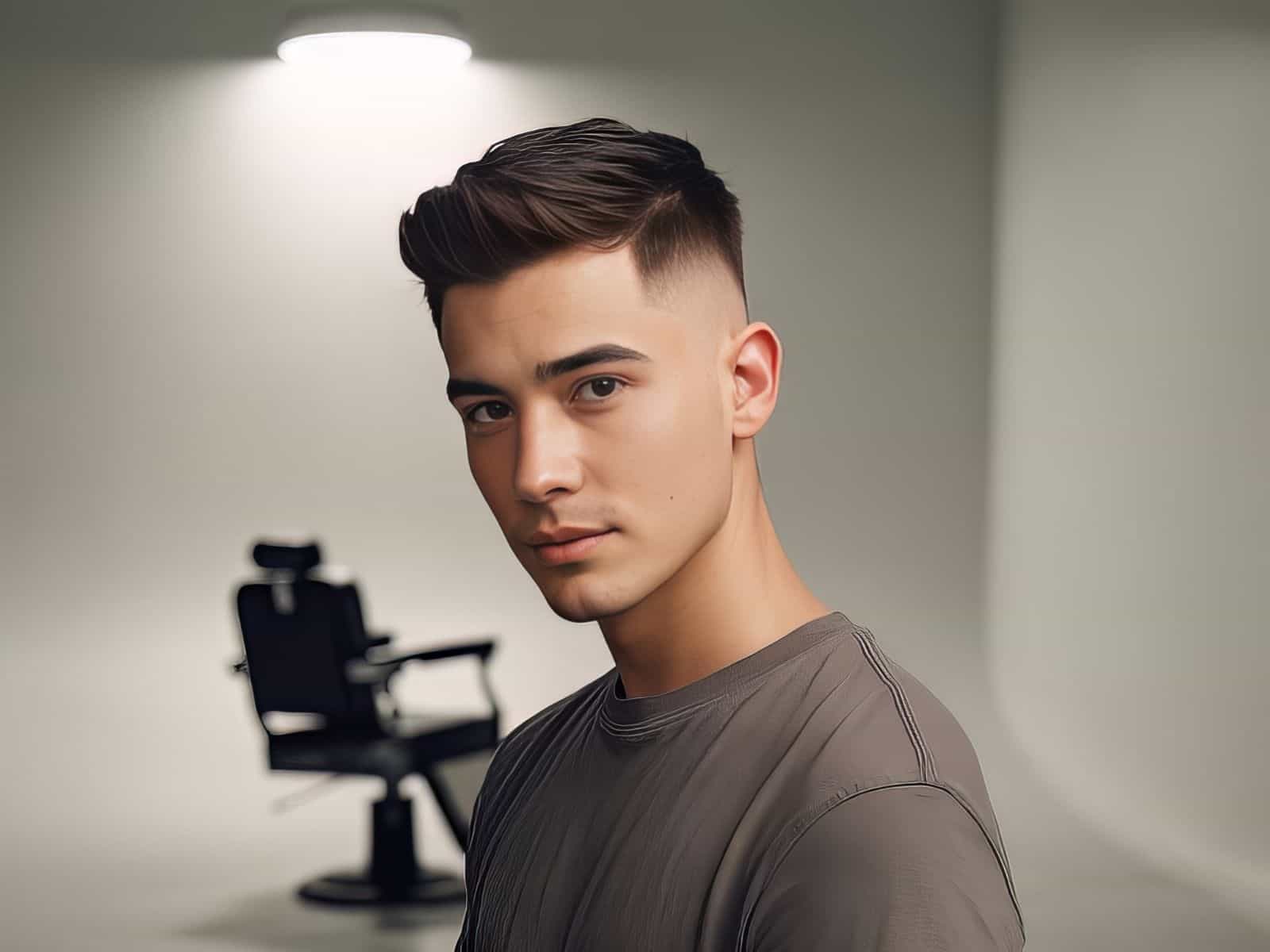
The pompadour is the haircut that refuses to go away, and for good reason. It looked good on Elvis in the 1950s. It looked good on James Dean. It looked good when the undercut revival brought it back around 2014, and it still looks good right now in 2026, sitting in the chair at a San Diego men’s salon while your barber works a comb and blow dryer like they’re conducting an orchestra.
But here’s what most “pompadour haircut” articles won’t tell you. There isn’t one pompadour. There are at least four distinct variations, and the one that works for your buddy might look terrible on you. It depends on your face shape, your hair type, your lifestyle, and how much time you’re willing to spend in front of a mirror every morning. This guide covers all of it, the history, the modern variations, who each style suits, how to style it, what products you need, how to talk to your barber, and how to keep it looking sharp between appointments.
A Quick History of the Pompadour
The pompadour gets its name from Madame de Pompadour, the mistress of King Louis XV of France, who wore her hair swept dramatically upward in the 18th century. The style crossed oceans over the next two hundred years, landing in 1950s America where it became synonymous with rock and roll. Elvis Presley’s pompadour wasn’t just a hairstyle, it was a cultural statement. In an era of crew cuts and conservative side parts, sweeping your hair up with pomade said something about who you were. Johnny Cash wore one. Little Richard wore one. James Dean’s more relaxed version became the template for the “cool without trying” look that’s still aspirational today.
The style faded through the ’70s, ’80s, and ’90s, but came roaring back in the 2010s as part of the broader undercut and vintage grooming revival. Barbershops that had been doing the same ten haircuts for decades suddenly had guys walking in with photos of Peaky Blinders characters. The modern pompadour was born, and it’s evolved significantly from what Elvis was doing with a jar of Royal Crown.
Modern Pompadour Variations
The basic concept is the same, volume on top, swept up and back, shorter sides, but the execution varies wildly. Here are the main styles and who each one is built for.
1. The Classic Pompadour
Hair on top is blown dry with volume, swept back in a smooth, rounded shape. Sides are tapered or faded. Think Elvis, but updated with a modern fade instead of slicked-back sides. Best for men with medium to thick, straight or wavy hair, you need 4 to 6 inches on top to create that signature volume. Suits oval and square face shapes particularly well, as the upward sweep elongates the face and balances strong jawlines. Styling takes 10 to 15 minutes daily with a blow dryer and medium- to high-hold pomade.
2. The Textured Pompadour
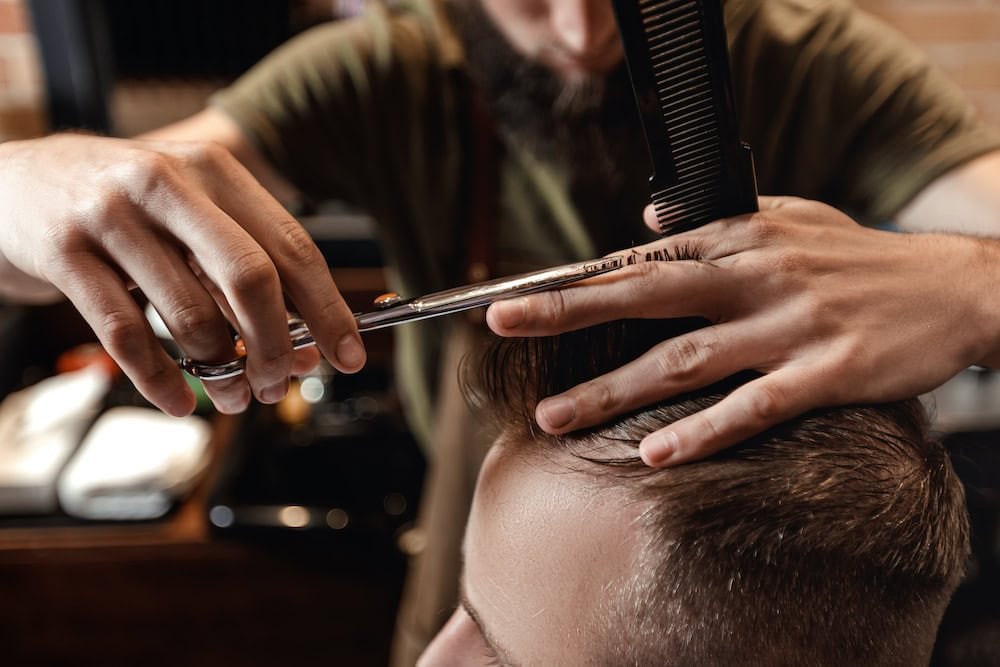
Same basic shape, but with deliberate texture and movement instead of a smooth sweep. The top looks more natural, almost tousled, with individual pieces visible rather than one solid wave. This is the pompadour for guys who want the look without the “I spent 20 minutes on my hair” vibe.
The textured pompadour is the most forgiving variation, it works on straight, wavy, and even curly hair. It suits round faces because the height creates a more oval silhouette. It also works for thinner hair since the texture creates the illusion of density. Five to ten minutes of styling with a matte paste or texturizing clay. If you’ve got thick hair, this is also an excellent option.
3. The Disconnected Pompadour
The most dramatic variation. Instead of a gradual blend from the longer top into shorter sides, there’s a hard, visible line of disconnection, shaved or skin-faded sides with 4 to 6 inches of volume on top. It’s a high-contrast cut that makes a statement. Best on angular face shapes like diamond, oblong, or heart-shaped. Requires thick hair and a touch-up every 2 to 3 weeks to keep the lines clean. Daily styling takes 10 to 15 minutes with a strong-hold pomade or clay.
4. The Low Volume (Modern Casual) Pompadour
The understated cousin. Keeps the swept-back shape but at a fraction of the height. Think of it as a pompadour for guys who work in offices where a six-inch quiff might raise eyebrows. Best for men with finer hair who can’t achieve the volume for a classic pompadour, and guys who want something versatile enough for both the boardroom and the weekend. Works across almost all face shapes because the proportions are subtle. Five minutes or less with a lightweight pomade or grooming cream. This is also the best entry point if you’re new to the pompadour, less commitment, less risk.
Matching the Pompadour to Your Face Shape
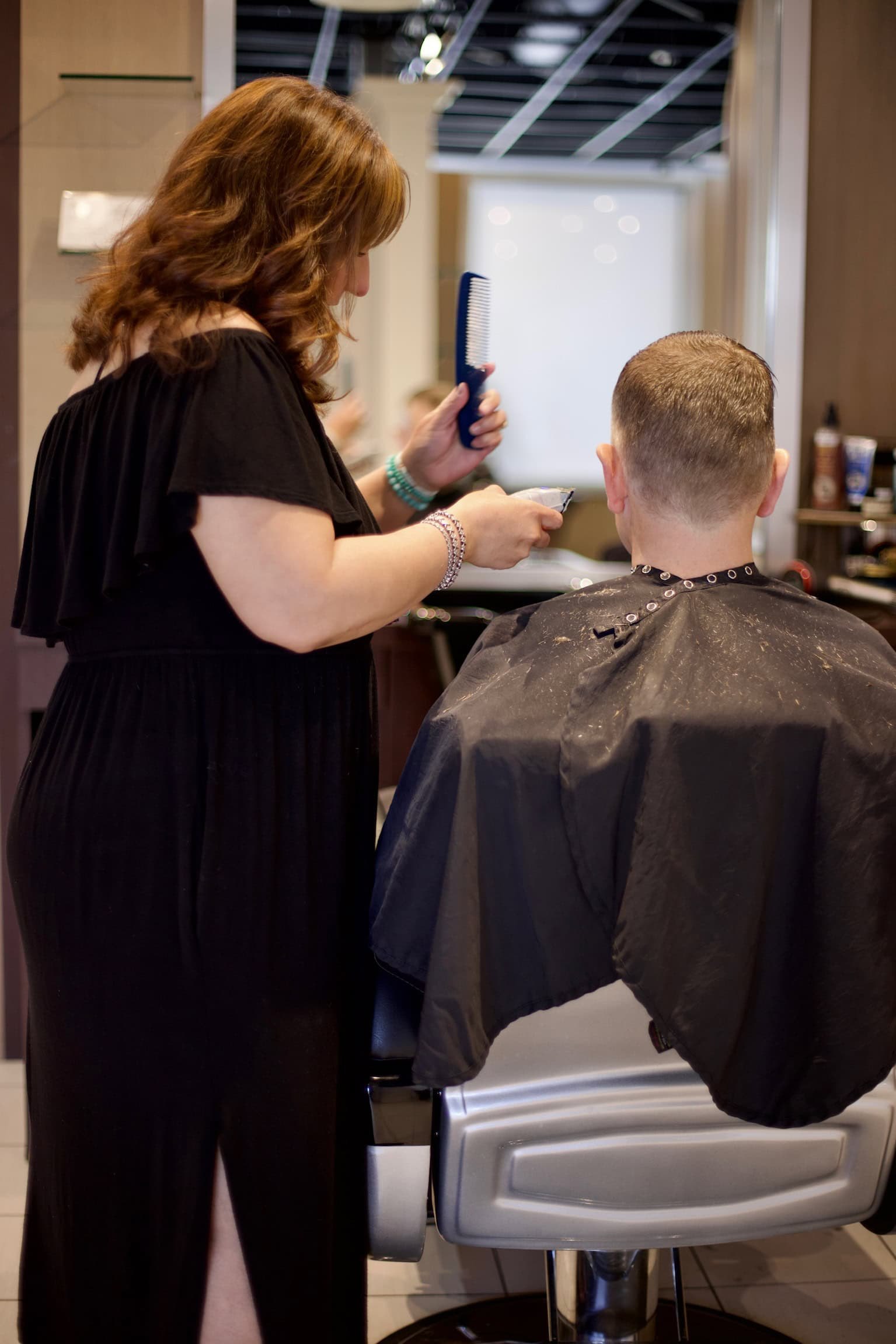
Your face shape matters more than most guys realize when choosing a pompadour variation. Here’s the quick breakdown:
Oval face: Almost any variation works. Balanced proportions handle both high and low volume without looking disproportionate.
Round face: Go for height. A classic or textured pompadour elongates the face and creates the illusion of a more angular jawline. Avoid low-volume styles that won’t provide enough contrast.
Square face: One of the best face shapes for a pompadour. The rounded volume softens angular features, and a tapered fade keeps things balanced.
Oblong face: Careful with too much height, it makes a long face look longer. A low-volume or textured pompadour with some width on the sides works better.
Heart or diamond face: The pompadour’s volume on top balances a wider forehead or cheekbones against a narrower chin.
Not sure what your face shape is? That’s what a consultation is for. The stylists at 18|8 can recommend the right variation before a single hair gets cut.
How to Style a Pompadour at Home
You got the cut. Now you need to maintain it. Here’s the process that works across most pompadour variations:
Step 1: Start with towel-dried hair, about 80% dry. Not dripping wet, not fully dry.
Step 2: Apply a volumizing mousse or spray at the roots. This builds the foundation that your finishing product locks in.
Step 3: Blow dry using a round brush or your fingers to lift hair up and back from the forehead. Point the nozzle in the direction you want the hair to go. Work in sections from front to back.
Step 4: Work a dime-sized amount of finishing product between your palms and distribute from root to tip. Shape the volume and set the direction.
Step 5: Final touches with a comb or fingers. If you need more hold in a specific area, apply a small amount of product directly there.
Pro tip: Your blow dryer is the real tool here, not the product. Product sets what the dryer creates. If you skip the blow dryer and try to build a pompadour with product alone, you’ll get a flat, heavy mess, not the volume you’re after.
Products You Need for a Pompadour
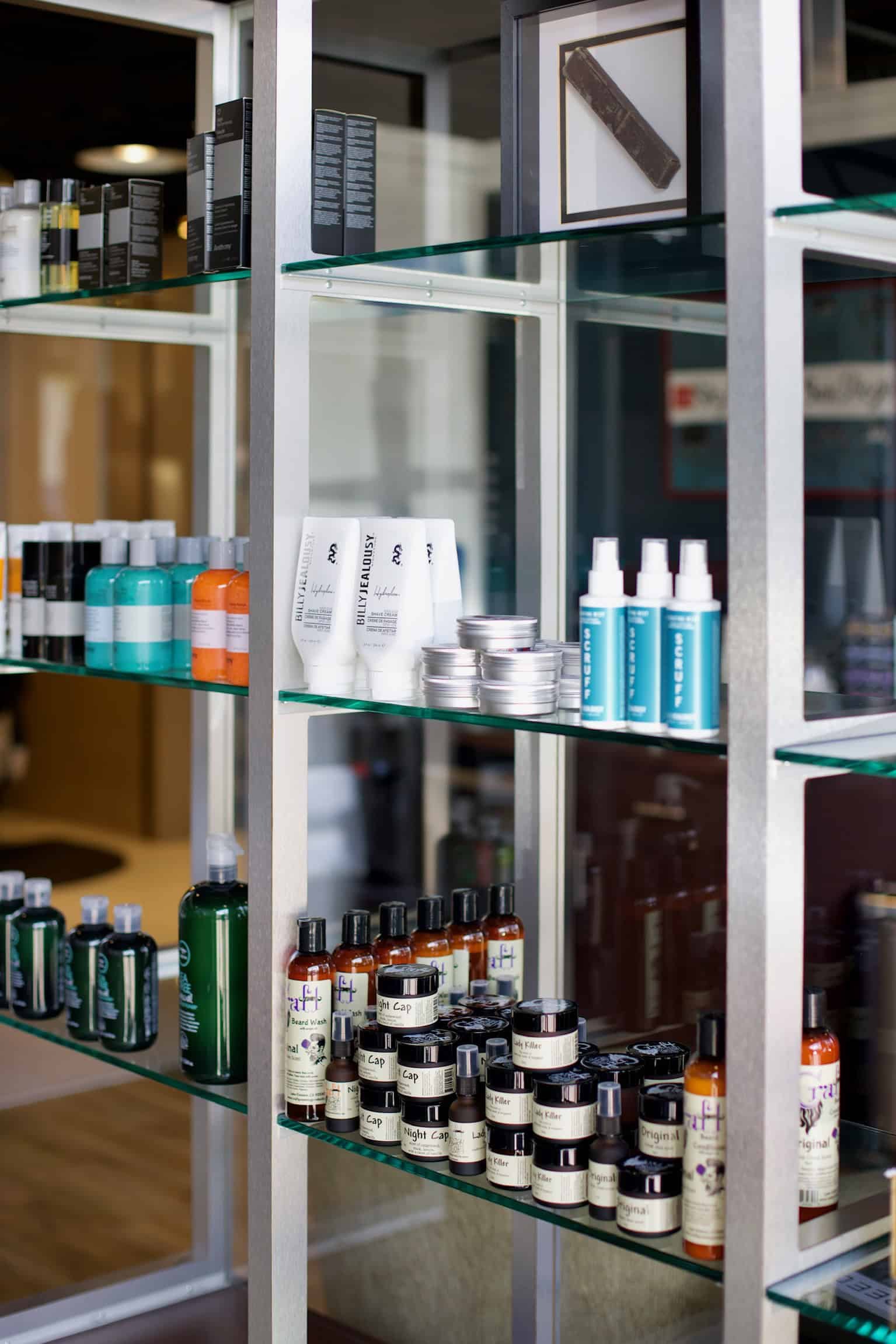
Pomade (medium to high hold): The traditional pompadour product. Water-based is the way to go for most guys, easier to restyle during the day and washes out in one shampoo.
Matte clay or paste: For textured pompadours. Provides hold and separation without shine. Creates that “I woke up like this” look that actually took seven minutes.
Volumizing spray or mousse: Applied to damp hair before blow drying. This is what creates the lift that your finishing product locks in. Skip this step and your finishing product does double duty, it won’t hold as long.
Hairspray (optional): A light-hold finishing spray for days when the San Diego coastal breeze is not cooperating.
The right product depends on your hair type and the variation you’re wearing. Ask your stylist at your next appointment rather than guessing at the drugstore. More on hair and scalp health.
How to Ask Your Barber for a Pompadour
Walking into a barbershop and saying “give me a pompadour” is like walking into a restaurant and saying “give me food.” Technically correct, but you need to be more specific.
Bring a photo. Find two or three reference images of the variation you want and show them to your barber before they start. A photo eliminates 90% of miscommunication.
Specify the sides, skin fade, low fade, mid fade, taper, or disconnected. Talk about the top, how much length, how much volume, smooth or textured. Mention your lifestyle, if you only have five minutes to style in the morning, say so. A good barber at a men’s salon like 18|8 will tell you honestly whether a particular variation works with your hair and face.
Keeping It Sharp Between Cuts
A pompadour is not a low-maintenance haircut. That’s the trade-off for having the best-looking hair in the room.
Haircut frequency: Every 3 to 4 weeks for faded sides, every 4 to 6 weeks for tapered sides. The pompadour loses its shape faster than simpler styles because the contrast between top and sides is what makes it work.
Daily styling: 5 to 15 minutes depending on the variation. Don’t wash your hair every day, every 2 to 3 days is better for pompadour styling because natural oils help with hold and texture. On non-wash days, rinse with water and restyle with product.
Hair health: A pompadour puts consistent stress on your hair through heat styling and product use. Consider adding a scalp treatment or deep conditioner once a month. Healthy hair holds style better.
Can You Get a Pompadour With Your Hair Type?
Thick hair: Your best friend for pompadours. Natural volume and strong hold. More styles for thick hair.
Thin or fine hair: Yes, with a low-volume or textured variation. Volumizing products are essential, they create the illusion of density that fine hair lacks on its own.
Wavy hair: Some of the best-looking pompadours happen on wavy hair because the natural wave adds movement without extra effort.
Curly hair: The curly pompadour is its own category and it’s gaining serious popularity. Work with your natural texture, not against it.
Straight hair: Relies more on product and blow drying for texture and volume, but absolutely works.
Receding hairline: A pompadour can actually work in your favor, the swept-back style doesn’t draw attention to the hairline. Talk to your barber honestly about what’s realistic.
Frequently Asked Questions
How long does my hair need to be for a pompadour?
At least 3 to 4 inches on top for a basic pompadour, and 5 to 6 inches for a classic high-volume style. The sides can be any length depending on whether you want a fade, taper, or disconnected look. If you’re growing out from a short cut, expect 3 to 4 months to reach pompadour-ready length.
Is a pompadour high-maintenance?
Compared to most men’s haircuts, yes. Classic and disconnected variations require daily blow drying and 10 to 15 minutes of styling. Textured and low-volume versions take 5 to 10 minutes. Haircuts every 3 to 4 weeks. If that sounds like too much, the textured pompadour offers the best ratio of style to effort.
What’s the difference between a pompadour and a quiff?
The pompadour sweeps hair up and back in a rounded shape. The quiff sweeps hair up and slightly forward, creating more of a peak at the front. In practice the line is blurry, many modern pompadours have quiff-like elements. Your barber can adjust the direction to find the sweet spot.
Can I get a pompadour at any barbershop?
You can, but quality varies. A pompadour requires more technical skill than a basic haircut, the blending, layering, and shaping all need to be precise. A men’s salon like 18|8 that specializes in men’s grooming will have stylists who cut pompadours regularly and can advise on the right variation for you.
How much does a pompadour haircut cost in San Diego?
At 18|8 Fine Men’s Salons in 4S Ranch, a Classic Haircut is $62. That includes a consultation, shampoo, cut, and style. For a pompadour, the consultation is especially important, your stylist will discuss the right variation for your hair type and face shape before cutting.
Will a pompadour work with my beard?
Absolutely. A pompadour pairs well with almost any beard style. A clean fade with a shaped beard is one of the most popular combinations in men’s grooming right now. Your barber can handle both in the same appointment.
Book Your Pompadour Consultation at 18|8 in 4S Ranch
Whether you’re going classic, textured, disconnected, or trying a pompadour for the first time, it starts with a conversation. The stylists at 18|8 Fine Men’s Salons in 4S Ranch specialize in men’s hair, they’ll look at your hair type, face shape, and lifestyle, then recommend the variation that works for you. No guesswork.
Want to take your pompadour to the next level? Adding subtle color or gray blending can create depth and dimension that makes the style pop. Learn more about your options.
Location: 10543 4S Commons Dr., Ste #176, San Diego, CA 92127
Phone: (858) 914-5418
Book Online: schedule your appointment
Your pompadour is waiting. Book the chair.
Last Updated: September 2026